


What issues be noted in the construction of epoxy flooring
2024-12-26
In recent years, epoxy resin flooring has made great progress in China, especially in production workshops, supermarkets, underground garages, exhibition halls, classrooms, laboratories and other places where it is widely used. Epoxy resin flooring has high cleanliness, wear resistance, corrosion resistance, impact resistance, seamless, solid texture, easy maintenance, low maintenance costs, and excellent decorative effects. Of course, to ensure the realization of these advantages, it is necessary to carry out quality control throughout the entire process, from substrate quality and surface treatment to coating environment and coating scheme, all of which should be combined with the construction process and characteristics of epoxy resin flooring to carry out corresponding quality control. The substrate, which is the foundation layer of epoxy construction, is usually dominated by concrete floors. The condition of the floor has a great impact on the quality and quantity of the final epoxy flooring project. If the floor condition does not meet the requirements, it is difficult to do the epoxy project well, and phenomena such as peeling, detachment, and foaming often occur during the use of epoxy flooring.
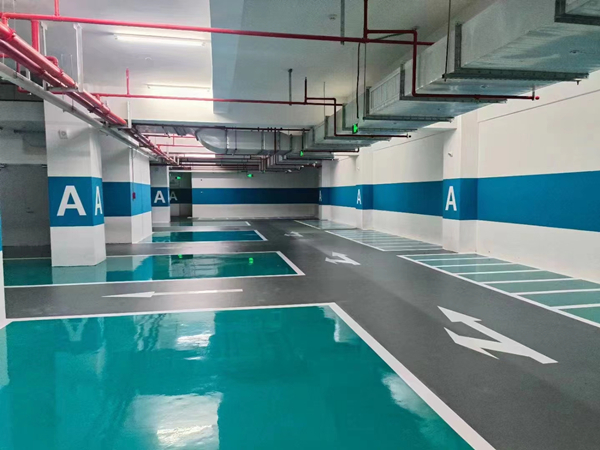
Therefore, a good condition of the substrate is a prerequisite for ensuring the quality of epoxy flooring engineering. If some substrates do not meet the requirements of epoxy flooring coating, this floor decoration method should not be used. The general requirements for concrete substrate in the construction of epoxy flooring in Wuxi are as follows:
Concrete requires flatness and compactness, with a strength requirement of not less than C20; If the strength is too poor, it will inevitably affect the pressure resistance, impact resistance, and durability of the coating. Smooth and finish; If the drop is large, the floor coating needs to be thickened to reduce the drop. If the ground to be painted is at the bottom layer and the groundwater level is high, the concrete bottom layer should be well waterproofed to avoid the steam pressure caused by the rise of groundwater from lifting the floor coating and causing bubbling and peeling. Newly constructed concrete should be dried for at least 3 weeks, with a moisture content not exceeding 6%. During the curing and drying process, local rain and ground water accumulation should be avoided, otherwise it may cause excessive moisture content in the local concrete. The strength of the fine aggregate concrete leveling layer on components such as floor slabs and reinforced concrete beams should not be less than C20, and the thickness should not be less than 0mm.